When it comes to heritage and design, where do you draw the line between adding something new and disrupting what’s already there? A case for this can be made at the beautifully restored Grand Hotel Belvedere in Wengen, a few hours by train from Zurich.
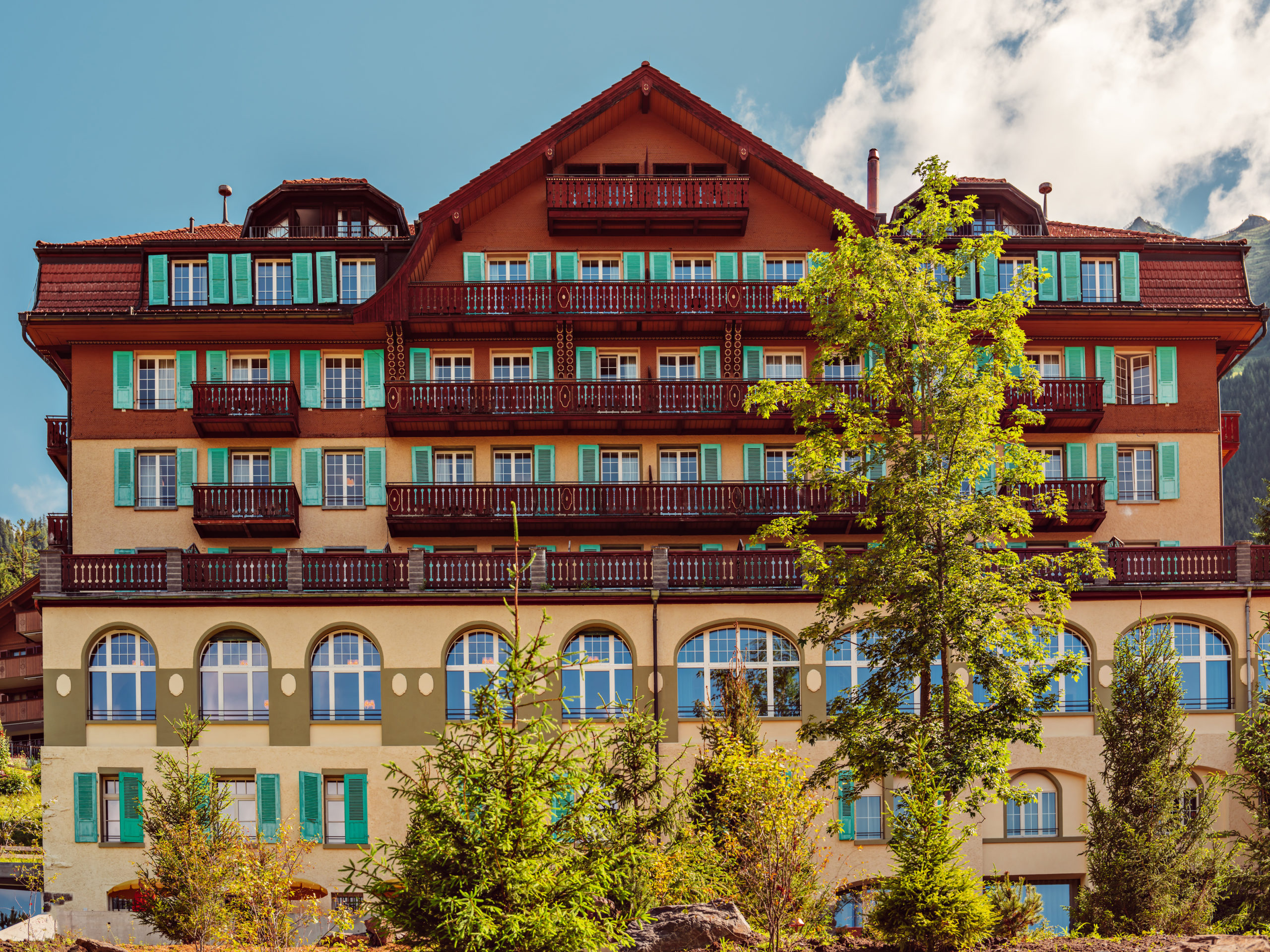
Built in 1912, at the height of the Belle Époque, the hotel reopened in stages under French hospitality group Beaumier: the Waldrand building first, in December 2024, followed by the second building and its new spa, which officially opened in May 2025. Swiss architects Complete Works and Clavien & Associés have restored the original Heimatstil and Art Nouveau interiors. The newly built spa sits between the two historic buildings in a deliberately brutalist register.
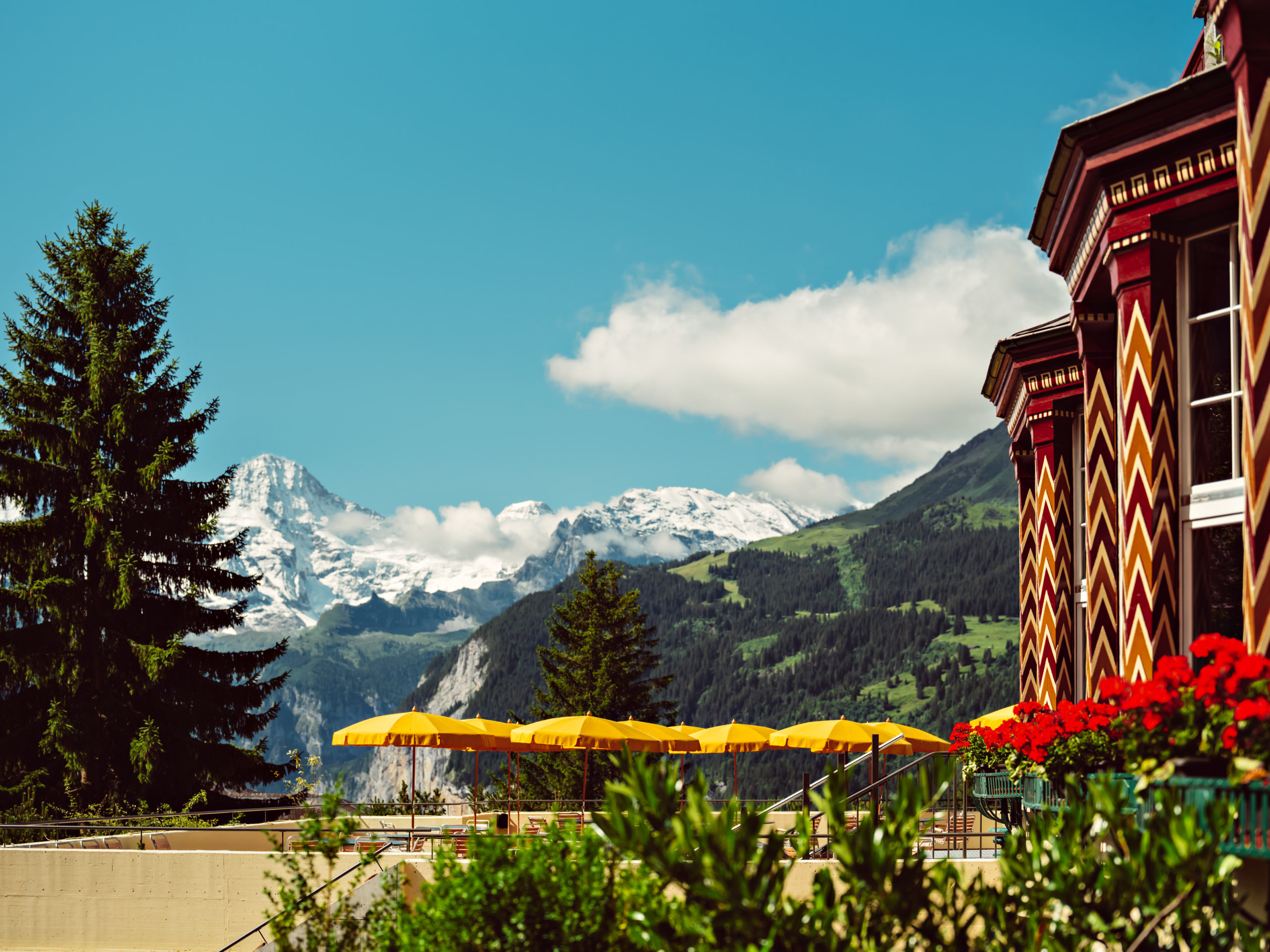
On a bright summer day, we’re picked up from Wengen station in a small electric van, the village car-free behind us. ‘It’s the only five-star hotel here,’ the driver says, proudly: ‘But it doesn’t really feel like it. Meaning, there’s nothing flashy about it. It feels more personal, and the place is just more grounded.’ I notice it too, soon enough: never do I need to mention my room number or name, they just recognise my face whenever I show up for breakfast or dinner. It makes me feel seen, looked after, but also just very relaxed. Like staying at a friend’s home.
That feeling stays with us for the whole trip. I spend my days here writing, gazing out at all that nature. Sometimes from the Sonnenbad Lounge & Terrace, where the famous Jungfrau mountain, towering 4,158 metres above, sits framed dead ahead. Its snow-dusted peak cloaked in pink when the sun sets. The whole space seems to have been designed around that view. Whether inside or outside, like from the wild garden. Said garden is designed in the spirit of landscape architects like Piet Oudolf and Bas Smets: biodiversity over control, local plant life left to do as it pleases. The bees roam freely. Even the town fox seems to agree; it’s cheekily taken to raiding the vegetable garden on occasion, while remaining perfectly friendly to guests. Set in all this abundant nature, the hotel is a peaceful place for quiet contemplation, and yet it’s filled with stories.
Walking into the lobby, we meet the charismatic general manager, Lorenz Maurer. Someone we’d actually crossed paths with a few years earlier at The Cambrian, where he worked before joining the Belvedere. He pours us a glass of the hotel’s homemade iced tea, then gives us a tour, gesturing around the space as he goes.
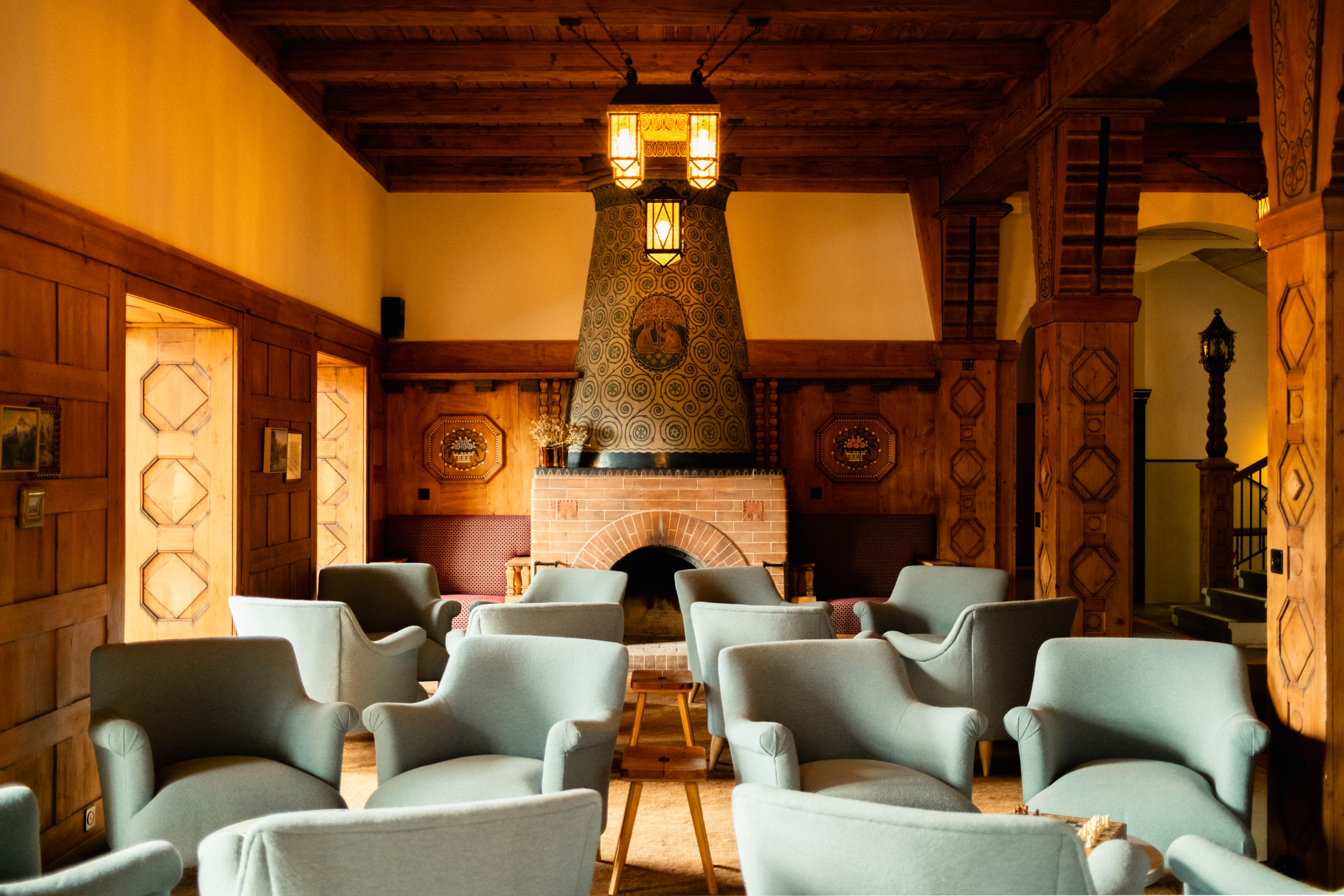
The original Bernese wood carvings, painstakingly restored, line the walls; the colours have been brought back to their original palette. The brown of the wood alongside dusty greens and blues. ‘You should have seen this place in the eighties,’ Maurer laughs. ‘Someone had painted orange dots all over the original carvings.’ The woodwork, back to its former glory now, was done in collaboration with many local artisans.
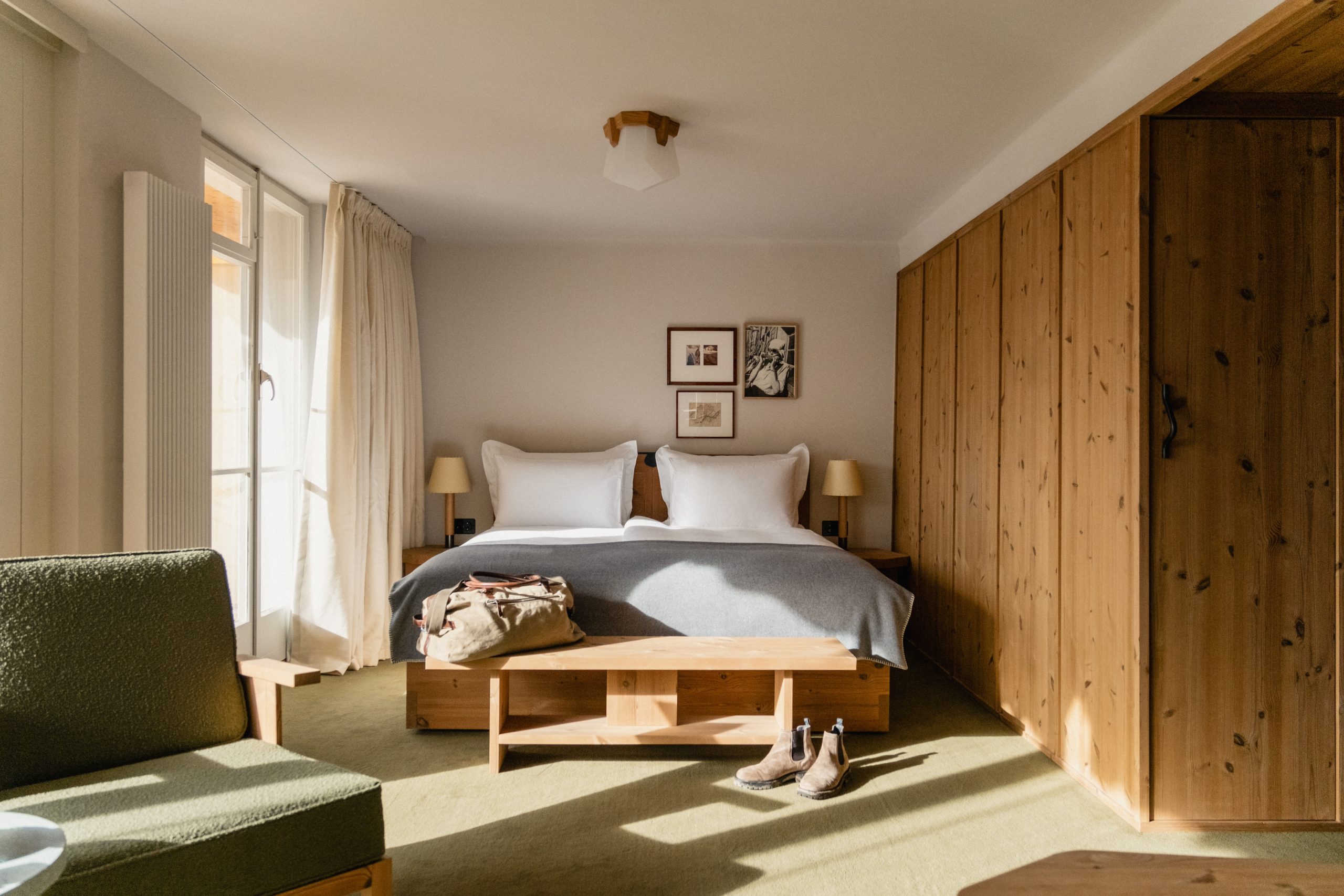
There’s a bit of a Wes Anderson feel to this place, too. We pass the restroom doors, tucked just beyond the lobby next to the staircase: dark, lacquered panels, brass handles, small panes of amber glass lit from behind, recalling the windows of a train carriage. The same idea resurfaces upstairs, in the guest rooms: a small curtained window between bathroom and bedroom, and for a second you could be travelling rather than staying put.
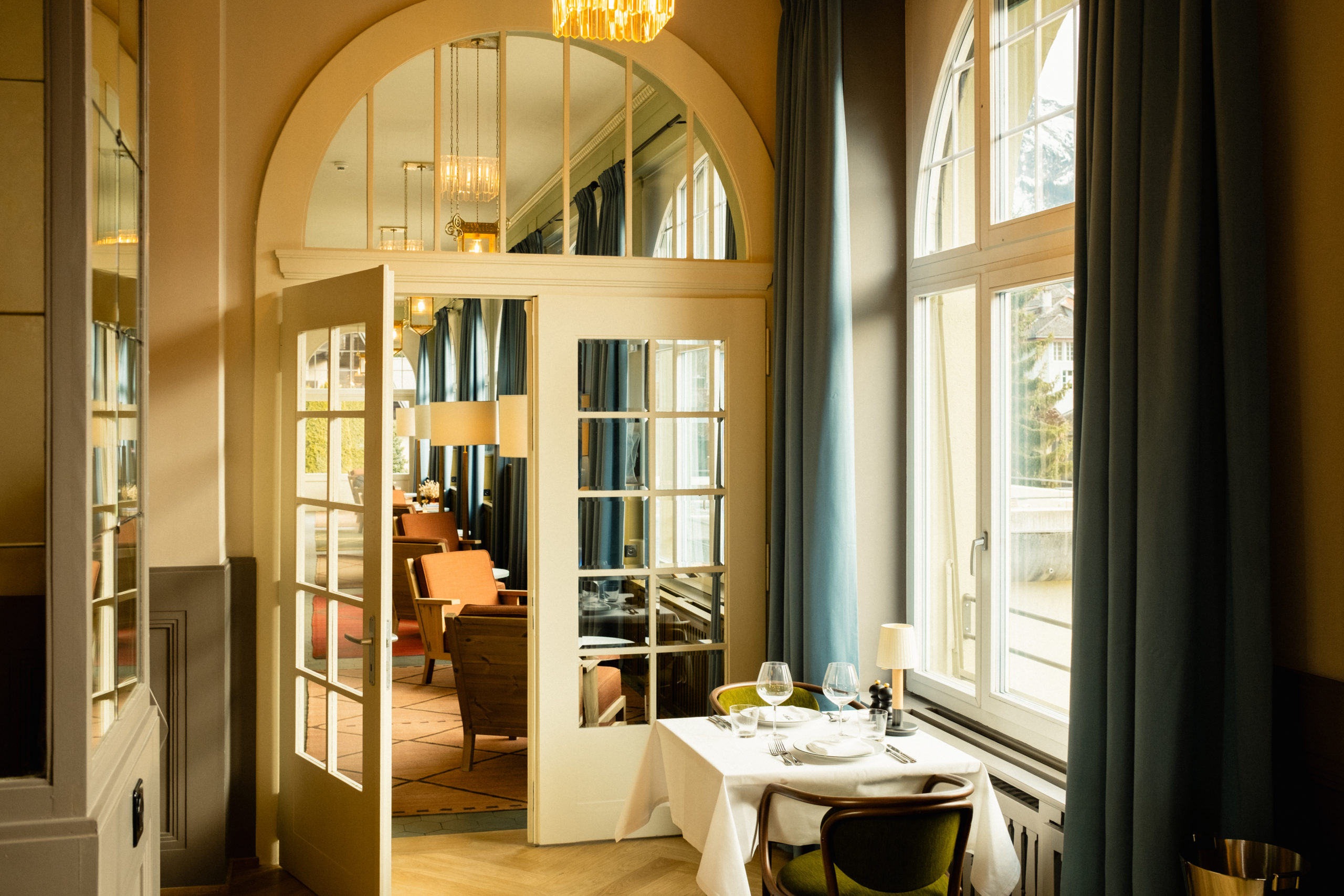
Still on the same floor, Maurer and I pass the bar – a round counter, backed by decorative wallpaper in an Art Deco style – and into the restaurant, its menu spearheaded by plant-forward chef Will Gordon.
We walk in, and a mural stops me in my tracks: a vaulted, ochre-gold ceiling scrawled with dense scrollwork, arched windows framed below it, the whole room glowing like the inside of a music box. ‘That’s pure Bernese style,’ Maurer explains. ‘My own grandmother used to paint like that, on wood furniture.’ It turns out the mural itself was a discovery; painted over at some point in the hotel’s history, then uncovered during the renovation. The original chandeliers still hang here too, restored, catching the same gold as the walls. Heritage here is treated as something inherited and lived.
We then descend to the spa, one floor down. Pointing to the floor of the changing rooms, a greyish-green stone, Maurer says, ‘That’s granite from Graubünden,’ the easternmost of the Swiss cantons, the same rugged material echoing the mountains just beyond the glass.
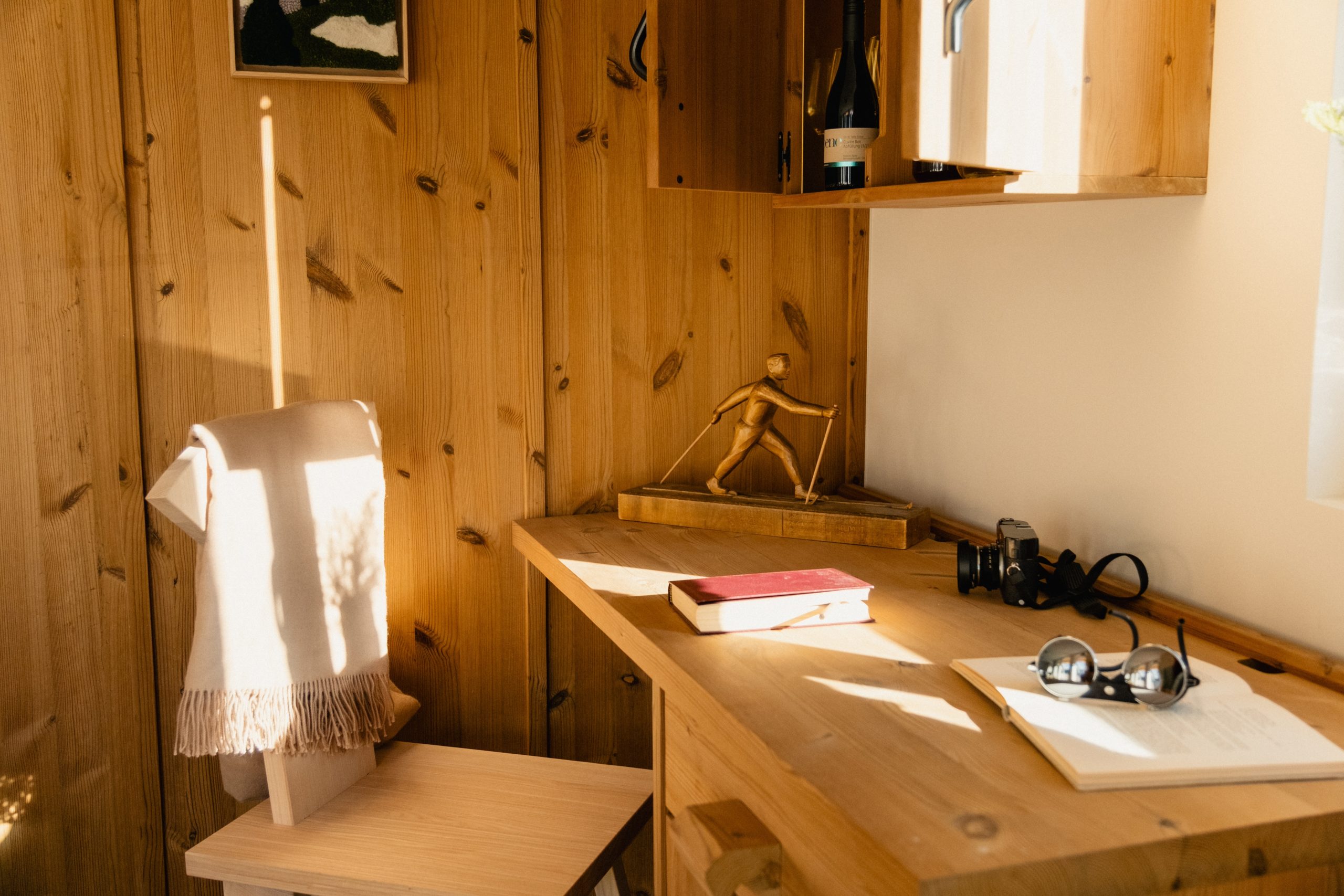
In the waiting room stands a simple stool and chair, both in untreated wood. Arnaud Christin of Complete Works has spoken about the priority of respecting the alpine building traditions of the period, particularly through custom-made furniture crafted from simple wooden elements. The stool, it turns out, is the Ulm Stool, designed in 1954 by Max Bill together with Hans Gugelot. Maurer picks it up, turns it over. ‘It was made for the school’s own students,’ he says, ‘produced in the carpentry workshop, from donated wood. You can use it as a seat, a side table, a shelf, even a tray.’
It’s here the conversation turns to the dialogue between old and new; the contrast between the original interiors and the spa itself. You’d think it would make sense to install an opulent Art Nouveau style spa here, in keeping with the original. ‘But we felt that wouldn’t really work here, it might turn out too forced,’ Maurer explains: ‘So the decision was to do something new, though still rooted in Swiss tradition.’ The reference point, he says, was architect Peter Zumthor: brutalist concrete set against the blue water of the pool, cut into triangles. It’s a deliberate shape, he explains, as we walk outside into the garden where the outdoor pool sits. Laughing: ‘Sometimes we think, shouldn’t the pool just have been rectangular?’ But the triangle is what gives it that particular angle onto the majestic Jungfrau. Form following view.
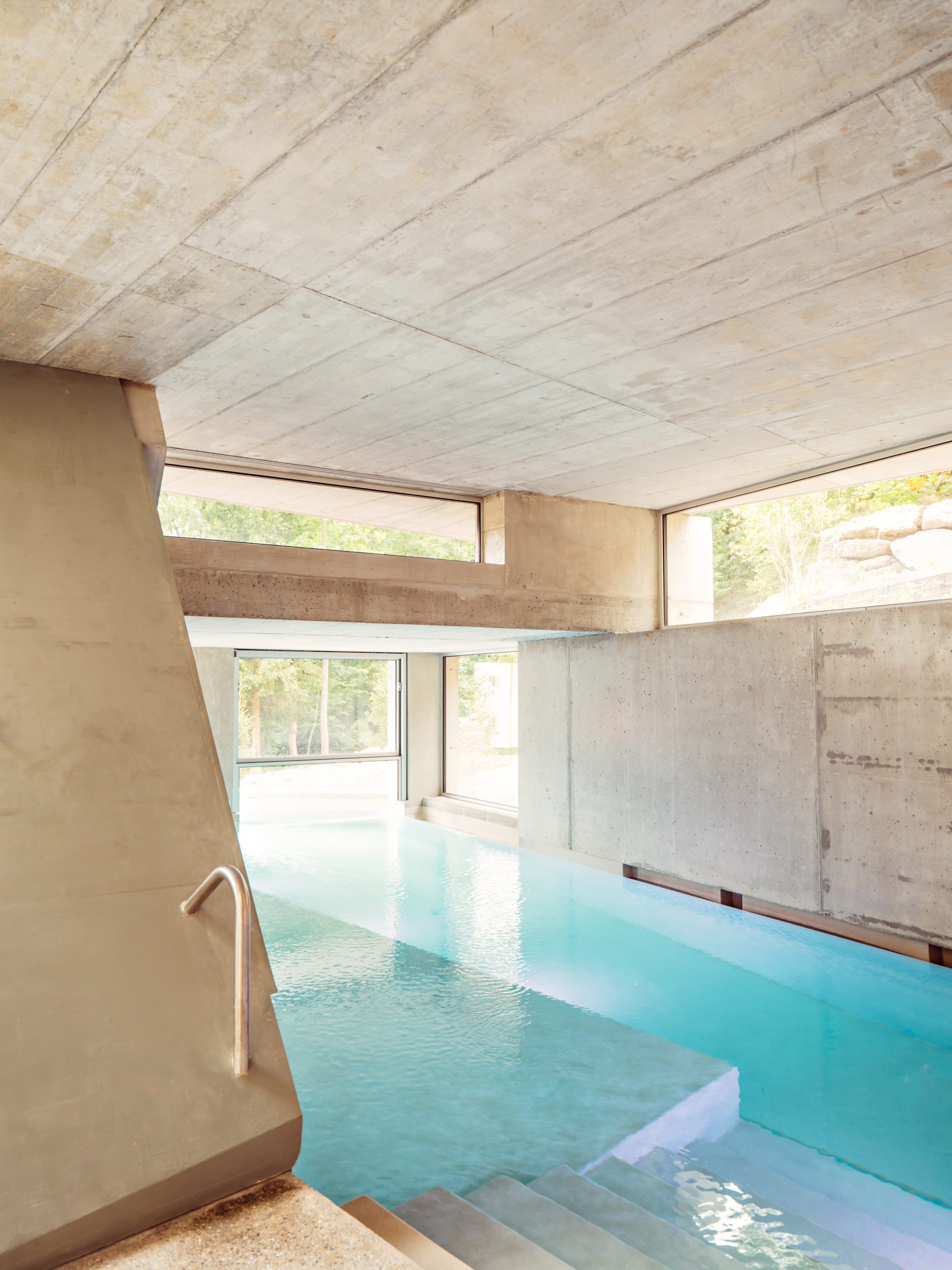
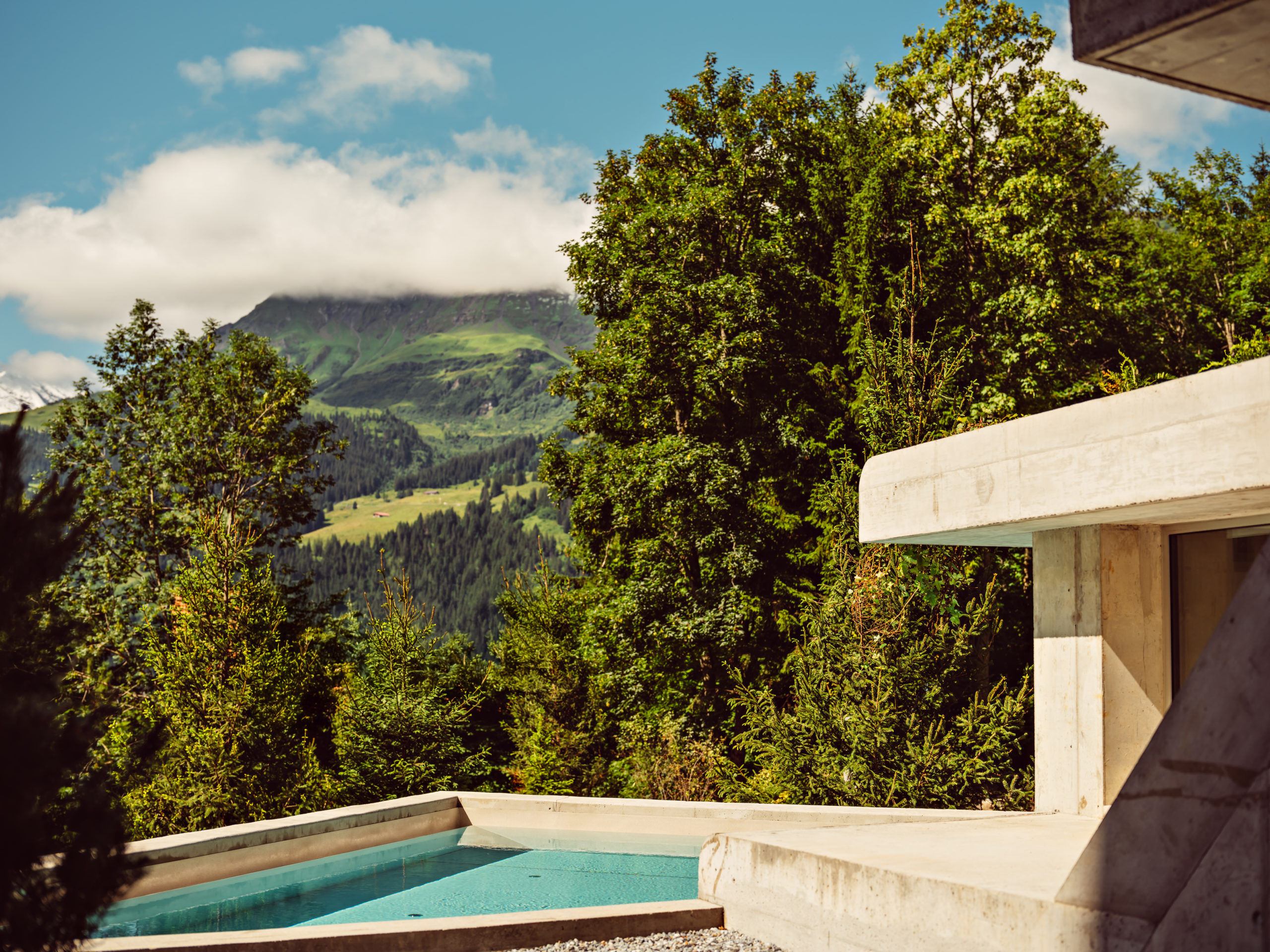 Valéry Clavien digs a little deeper into the spa’s relationship to its setting: despite being entirely new, he says, it settles into its surroundings like a brutalist relic that nature has slowly reclaimed. Standing outside, it’s easy to see what he means. Raw, board-marked concrete, wildflowers and grasses climbing up over the edges of the roof, the whole structure looking as though the landscape simply grew around it.
After we’ve roamed the spa – the Susanne Kaufmann pool, the sauna, the hammam – we walk on into the building opposite, home to more of the hotel’s guest rooms. It’s here, in its own small lobby, that Maurer points to a piece on the wall, and the conversation turns to the hotel’s art program.
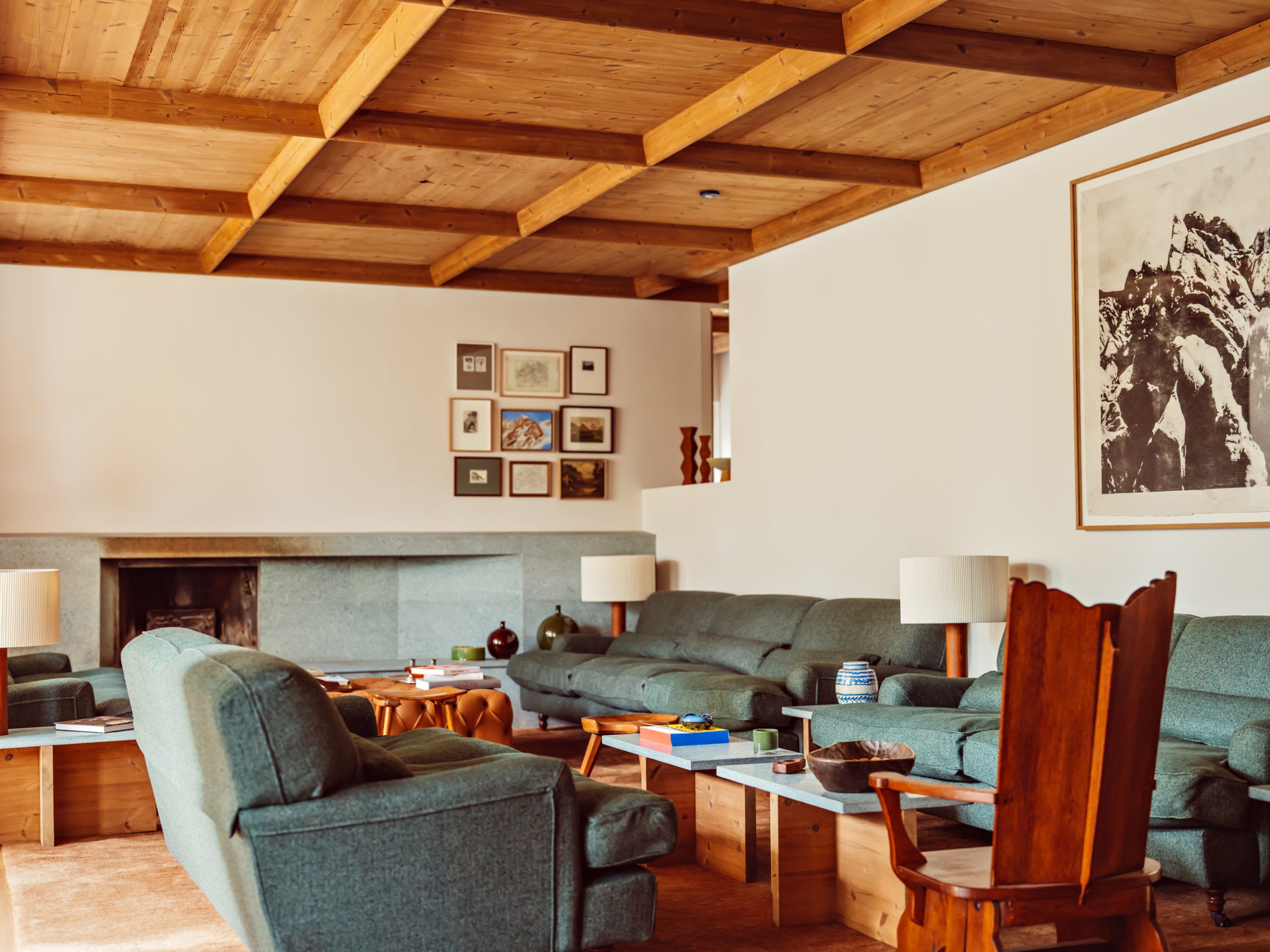
Maurer points out a large, tufted mountainscape by Manon Daviet – one of a series playing with the clichés of Swiss popular culture: alpine cows, glacier huts, cable cars rendered in wool and thread rather than photograph. Elsewhere, Douglas Mandry’s Monuments series hangs in the common spaces: photographs of snow-covered mountains from the 1930s and 40s, transferred onto worn « glacier blankets », the geotextile fabric currently used across Switzerland to slow glacial melt. The rest of the collection reads like a survey of the region’s own visual history: archival photography, geometric abstractions by the late Geneva sculptor Albert Chubac, silkscreen prints by climbers-turned-publishers Sébastien Roulet and Arthur Marcelja.
None of it feels curated for effect. It’s local craft treated with real weight.
Whether you’re interested in art or the outdoors, Grand Hotel Belvedere proves to be quite the sanctuary to fully unwind and immerse yourself in. It’s a year-round destination. One we got lucky to discover during a European heatwave, when the breeze of the mountains gave respite, but we can’t wait to return when ski season begins. Not to mention, they might have set up an actual artist-in-residence by then. The latter, Maurer mentions, is something they’re seriously contemplating. If you ask us, it would serve to be a phenomenal fit. Until then, there’s much to look forward to.
Kaira van Wijk
Benoit Linero
Lucas Dutertry